
What an anonymous text message is
An anonymous text message is a message that arrives with no usable sender attached. No real number, no name, no account the recipient can pull on. They read the words; the "from" line is a dead end.
It is the digital version of an unsigned note slipped under a door — except it travels in seconds and you do not have to disguise your handwriting. People send them for the ordinary, human reasons: honest feedback, a question that is easier without a name on it, a confession, or the social game of "guess who." Most anonymous texts are not sinister. They are just someone saying a true thing with the pressure turned down.
How an anonymous text message works
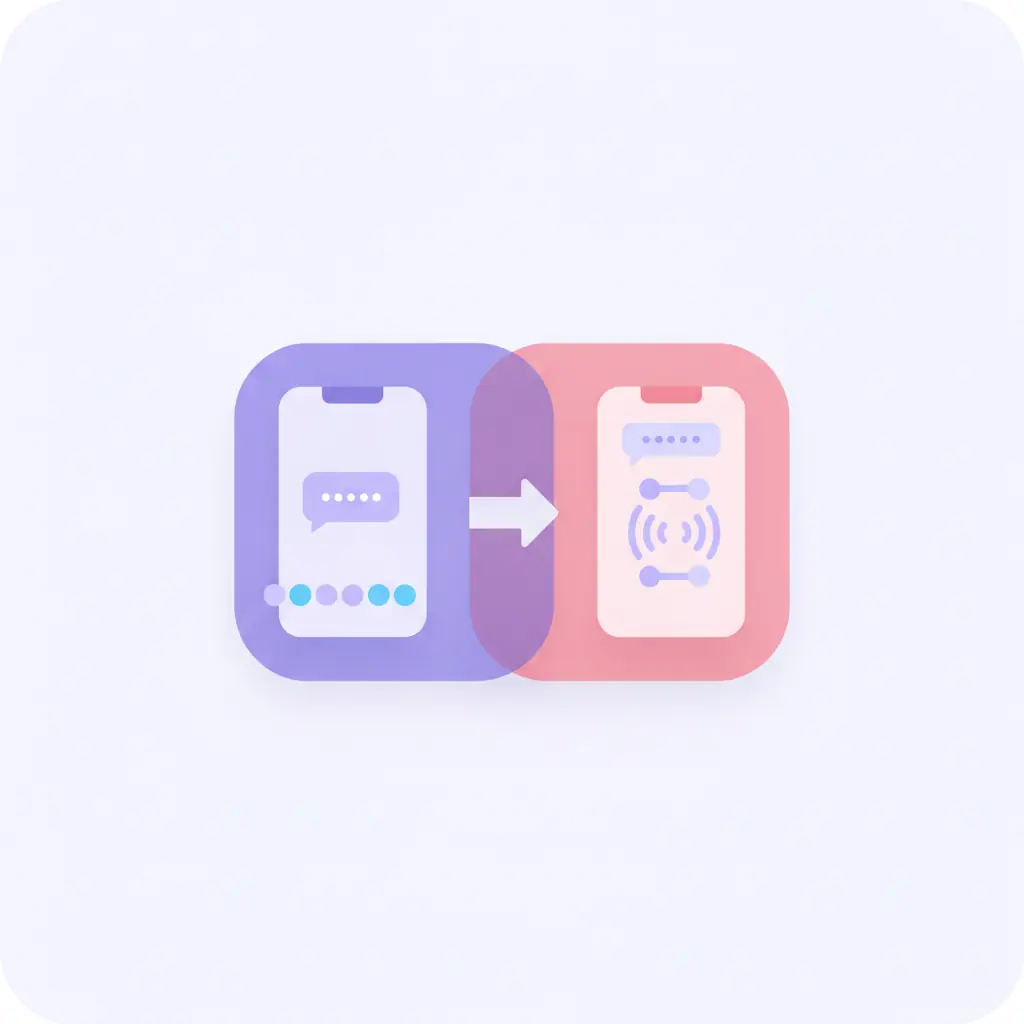
The mechanism is a swap. When you send through an anonymous text service, your number is stripped out and the service's own number is dropped in before delivery. The recipient's phone shows the relay, or "Unknown," or a label you chose. Your real number never reaches them.
Link-based platforms go further and never put a number in the loop at all — the message arrives in an inbox, not an SMS thread, with nothing attached because nothing was collected. Either way, the recipient is looking at a stripped envelope. The question is whether anyone can steam it open. (Spoiler: the recipient cannot. Someone with a court order might.)

Can an anonymous text message be traced?
This is the real question, so here is the straight answer in two parts.
By the recipient: realistically, no. They see a stripped number and have no way to reverse it. The "trace any text for $1.99" sites are selling hope, not capability. A determined person might guess from writing style or context, but that is detective work, not tracing.
By law enforcement: often, yes. Police can compel the texting service with a valid court order, and the service hands over what it has. Apps like TextNow and TextFree keep account records precisely so they can comply. So an anonymous text is anonymous to your group chat, not to a subpoena — which, honestly, is the correct design. The FCC and carriers have built real machinery here, mostly aimed at scammers.

The 4 things that link an "anonymous" text back to you
When an "anonymous" text does get traced, it is almost always through one of four records the sending service kept. Worth knowing what they are.
- The email used to register the account.
- The payment card on file, if you ever paid for anything.
- The device fingerprint — identifiers tied to your phone.
- The IP address used when you signed up or sent.
Notice the theme: the trail is created at sign-up, not at send. This is exactly why link-based platforms that collect none of those four for the sender are structurally more anonymous than a burner app you had to register. You cannot subpoena a record that was never created. A VPN can mask the IP if you want one more layer, though for honest use it is overkill. The EFF covers this well if you want the deep version.
How to send an anonymous text message
Quick version, ranked by reliability.
- Link platform (most reliable, no number leaked): the person shares a link, you message through it. See how to send an anonymous message.
- Web SMS sender (lands in their texts, may be filtered): enter a number, type, send. Details in our anonymous SMS guide.
- Burner app (reliable delivery, weaker anonymity): a second number that ties back to your account.
Three myths about anonymous text messages
This topic attracts confident nonsense. Three myths worth killing.
Myth 1: "Anonymous means untraceable." No. Anonymous to the recipient and untraceable to everyone are different leagues. The recipient hits a dead end; a court order does not. Most "anonymous" messages are perfectly traceable through the service's sign-up records.
Myth 2: "There are sites that reveal who sent an anonymous text." For a regular person, no working consumer tool does this. The "trace any text for $1.99" pages sell hope. Only the sending service can connect a message to an account, and only law enforcement can compel them.
Myth 3: "Police can never trace an anonymous text." Also wrong, in the other direction. With a valid order, the records — email, payment, device, IP — are exactly enough. The truth sits in the boring middle: hard for individuals, very doable for the law. The EFF's guide to threat modelling is the cure for both kinds of overconfidence.
Want an anonymous text with no trail to create?
A Tell Me Anything link collects no number, no email, no payment from the sender. The cleanest kind of anonymous, free, in 60 seconds.
Get Your Free Link →